
Now Reading: Why is My Garage Door Not Opening? Top Causes and Quick Fixes
- 01
Why is My Garage Door Not Opening? Top Causes and Quick Fixes
Why is My Garage Door Not Opening? Top Causes and Quick Fixes

Imagine it’s early morning, you’re ready to leave for work, and your garage door just won’t open. Frustration sets in fast. A stuck garage door isn’t just inconvenient—it can also disrupt your entire day and leave your home less secure.
If this scenario sounds familiar, you’re not alone. Every year, thousands of homeowners face garage door problems that seem to come out of nowhere.
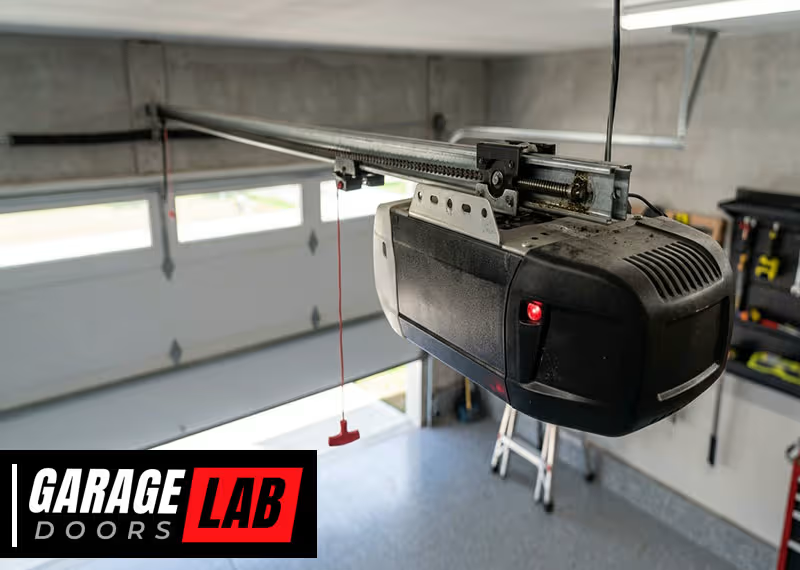
A garage door is one of the largest moving objects in your house. It relies on several parts working together smoothly. When something goes wrong, even something small, the whole system can stop working. In many cases, you can spot the cause with careful observation, but sometimes the problem is more hidden.
This guide will help you understand why your garage door is not opening, what you can do about it, and when it’s time to call a professional. We’ll cover the most common causes, give you practical troubleshooting steps, and share insights that most beginners miss. By the end, you’ll have a clear plan to get your garage door working again—or know exactly what to tell your technician.
Understanding How A Garage Door Works
Before you can fix a problem, it helps to know how things work. A typical garage door system has several key parts:
- Door panels (the large sections you see)
- Torsion or extension springs
- Tracks and rollers
- Cables
- Hinges and brackets
- Electric opener (motor)
- Remote controls or wall switch
- Sensors (safety eyes)
- Limit switches
- Manual release cord
Most problems happen when one of these parts fails or gets out of alignment. Sometimes, it’s a simple issue you can fix yourself. Other times, it’s a sign of a serious mechanical problem.
Common Reasons Why Your Garage Door Won’t Open
Let’s look at the most frequent causes, what signs to look for, and what you can do next.
1. Power Source Problems
If your garage door opener is electric, it needs power to work. Sometimes, the problem is as simple as a power outage or an unplugged unit.
- Check if the opener’s power cord is plugged in.
- Try another device (like a lamp) in the same outlet.
- Look for tripped circuit breakers in your home’s electrical panel.
Non-obvious insight: If you notice the opener’s LED lights are off, this is a strong clue the unit isn’t getting power. Also, sometimes GFCI outlets (usually found in garages) may have tripped and need resetting.
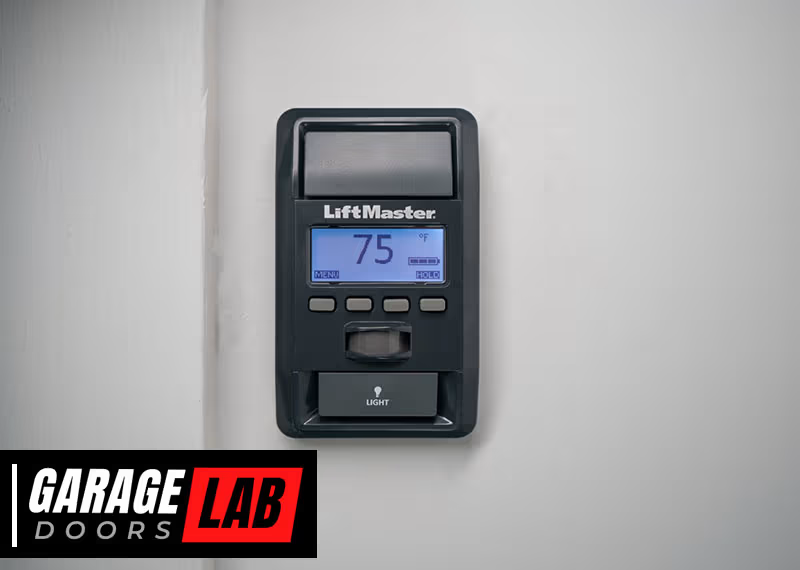
2. Remote Control Or Wall Switch Issues
If the remote control or wall switch isn’t working, the problem might not be the door itself.
- Replace the batteries in the remote.
- Try the wall switch inside the garage. If that works, the remote is the problem.
- Check if the remote is in range and pointed at the opener.
Pro tip: Many remotes can lose their connection with the opener if the code gets reset. Reprogramming the remote with your opener’s instructions might solve the issue.
3. Door Is Locked
Some garage doors have a manual lock for extra security. If this is engaged, your opener will strain but the door won’t move.
- Check for a horizontal bar across the door inside the garage.
- Look for a lock switch on the wall control panel. Some wall switches have a “vacation mode” that disables remote operation.
Hidden cause: If you recently had guests or maintenance workers, they might have locked the door without you knowing.
4. Door Is Off Its Tracks
Garage doors run on metal tracks. If the door comes off track, it can jam or refuse to open.
- Look for gaps between the rollers and the rails.
- Check for bent or damaged tracks.
- Listen for grinding or scraping sounds when you try to open the door.
Safety warning: Forcing a door that’s off-track can cause serious damage or injury. If you see the door is crooked or jammed, stop using the opener and call a professional.
5. Broken Springs
The torsion springs or extension springs provide the power to lift your heavy garage door. Springs have a limited lifespan (usually 7-12 years or 10,000 cycles).
- Listen for a loud bang—broken springs often snap with a sharp noise.
- If you see a gap in the spring or the door feels extremely heavy, this is likely the problem.
- The opener may hum but not lift the door.
Important: Never try to replace garage door springs yourself. These are under high tension and can cause severe injury. Always call a qualified technician for spring repairs.
6. Snapped Or Loose Cables
Cables work with the springs to lift the door evenly. If a cable snaps or slips off the drum:
- One side of the door may hang lower than the other.
- The door may jam or move unevenly.
- You might see frayed or broken cables near the bottom corner.
Tip: Cables often break after a spring fails, so check both parts if you suspect a problem.
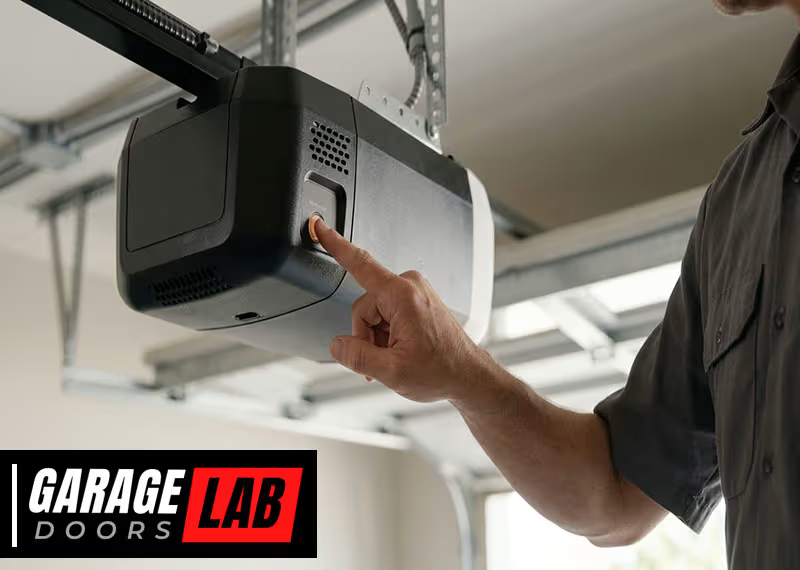
7. Opener Motor Malfunctions
The garage door opener is the motorized unit above your door. If it’s malfunctioning:
- The opener may make a humming sound but not move the door.
- You may hear clicking, grinding, or nothing at all.
- The opener’s lights may flash or stay off.
Extra check: Some openers have a reset button. Try unplugging the opener for 30 seconds, then plug it back in.
8. Blocked Or Misaligned Safety Sensors
Most garage doors have infrared safety sensors (the “eyes”) near the floor on each side of the door. If the sensors are blocked or misaligned:
- The door may start to close and then reverse.
- The opener’s lights may blink quickly.
- You might see dirt, cobwebs, or objects in the sensor path.
Easy fix: Clean the sensor lenses with a soft cloth. Make sure they are facing each other and the indicator lights are solid (not blinking).
9. Broken Or Worn Rollers
Rollers help your door move up and down smoothly. Over time, they can break, wear out, or pop out of their tracks.
- Listen for squeaking, grinding, or bumping noises.
- The door may move jerkily or stop partway.
- Inspect the rollers for cracks or flat spots.
Maintenance tip: Lubricate rollers every 6-12 months with garage door lubricant to extend their life.
10. Disengaged Manual Release
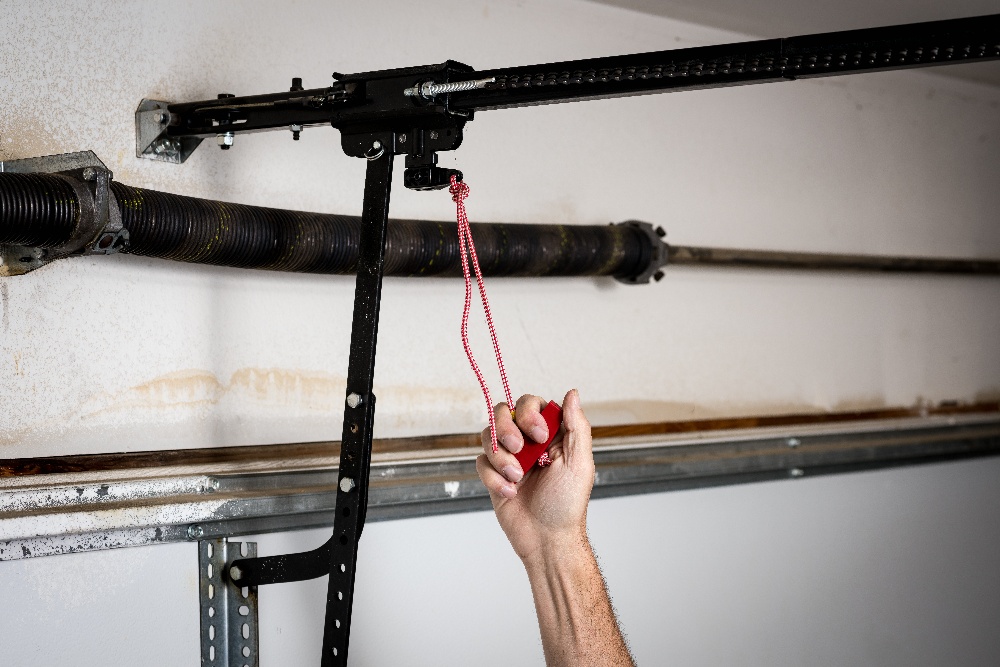
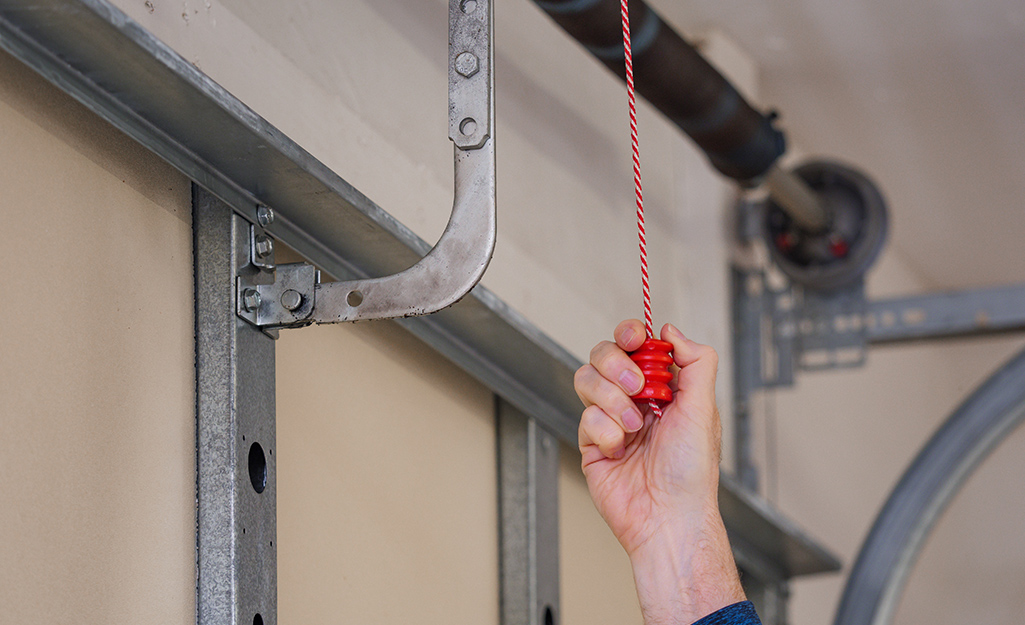
All electric openers have a manual release cord (usually red), allowing you to open the door by hand during power outages.
- If the cord is pulled, the opener and door become disconnected.
- The motor may run but the door stays still.
- You can move the door up and down by hand.
How to fix: Re-engage the door by pulling the cord toward the opener, then running the opener to reconnect.
11. Weather-related Issues
Extreme weather can cause several problems:
- Cold weather can freeze the door to the ground.
- Expansion of metal parts in heat can cause misalignment.
- Ice or snow buildup can block tracks or sensors.
Quick solution: Gently clear ice, snow, or debris from the bottom of the door and tracks.
12. Worn Or Broken Hinges
Hinges connect the panels of your garage door. If they break or seize up, the door may not bend properly when moving.
- Look for broken or missing screws.
- Listen for popping or binding sounds.
- The door may get stuck partway up.
Maintenance reminder: Regularly check hinges for signs of wear and lubricate them.
13. Stripped Gear In The Opener
Inside the opener’s housing is a gear that drives the chain or belt. Over time, this drive gear can wear out.
- The opener runs but nothing happens.
- You may hear the motor but the chain/belt doesn’t move.
- Small plastic shavings may be found near the opener.
Non-obvious insight: This is more common in older openers (10+ years) or those frequently used.
14. Limit Settings Are Off
Garage door openers have limit switches that tell the door how far to move up or down. If these are set incorrectly:
- The door may stop before fully opening or closing.
- The door may reverse after touching the floor.
- You may need to adjust the up/down limits on the opener.
How to adjust: Check your opener’s manual for instructions. Usually, these are small screws or dials on the motor unit.
15. Obstructions In The Track
Small objects like rocks, tools, or even dirt can block the tracks.
- The door may stop suddenly or get stuck.
- You might hear a sudden thud or clunk.
- Check for visible debris along the tracks.
Tip: Always clear the garage area near the tracks to prevent this issue.
16. Damaged Door Panels
Damage from impacts (like backing into the door) can bend or warp panels.
- The door may look uneven or won’t move smoothly.
- Gaps may appear between panels.
- The opener may strain or stop moving the door.
Important: Even minor panel damage can affect the whole system. Repair or replace as needed.
17. Faulty Circuit Board Or Logic Board
The circuit board in your opener controls all functions. Power surges, lightning, or age can cause it to fail.
- The opener doesn’t respond to remote or wall switch.
- You may see blinking or dead indicator lights.
- Other electrical devices in the garage work fine.
Advanced insight: Some openers let you swap out just the circuit board, which can be cheaper than replacing the whole unit.
18. Unresponsive Or Damaged Keypad
If you use an external keypad to open your garage:
- Old batteries or worn buttons can prevent it from working.
- Keypads exposed to weather can get water damage.
- Try changing the code or batteries.
Pro tip: If the keypad lights up but doesn’t work, it may need to be reprogrammed.
19. Chain Or Belt Issues
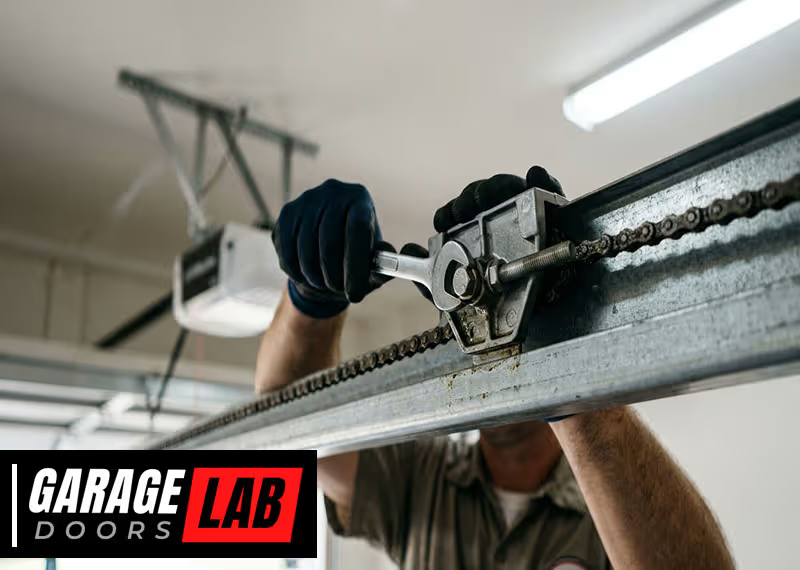
The chain or belt drive connects the opener to the door. Over time, it can become loose, broken, or slip off the sprocket.
- A loose chain will slap against the rail, making noise.
- The door may not open fully or move at all.
- Inspect for obvious sagging or damage.
Maintenance tip: Tighten the chain/belt following your opener’s instructions, but don’t overtighten.
20. Age And General Wear
Garage doors don’t last forever. With regular use, parts wear out.
- Most garage doors last 15-30 years.
- Openers typically last 10-15 years.
- If your door is at the end of its lifespan, frequent problems are a sign it’s time to replace.
Smart move: Upgrading to a new opener or door improves safety and reliability.
Practical Troubleshooting Steps
If your garage door won’t open, use these steps to diagnose the problem:
- Check the power: Is the opener plugged in? Are other electrical devices working?
- Test the remote and wall switch: Try both. If one works, you’ve narrowed down the problem.
- Inspect the door: Look for visible damage, broken springs, or loose cables.
- Listen for sounds: Grinding, clicking, or humming can point to specific problems.
- Check the sensors: Clean and align them if needed.
- Try the manual release: Can you lift the door by hand? If not, the problem is mechanical.
- Look for obstructions: Clear debris from tracks and the area around the door.
- Adjust settings: If the door only opens partly, check the opener’s limit adjustments.
- Test after each step: Don’t skip steps—some problems have more than one cause.
When To Call A Professional
While some garage door issues are easy to fix, others are dangerous or require special tools. You should always call a qualified technician for:
- Broken springs or cables
- Major track damage
- Electrical problems inside the opener
- Door is crooked or jammed
- Repeated problems that don’t respond to basic fixes
Attempting DIY repairs on springs or cables can cause serious injury. Professionals have the training and equipment to handle these safely.

Table: Common Garage Door Problems And Solutions
Here’s a quick reference for common problems and their typical solutions:
| Problem | Possible Cause | DIY Fix? | When to Call Pro |
|---|---|---|---|
| Door won’t open (no sound) | Power issue | Yes | If wiring is damaged |
| Opener hums, door doesn’t move | Broken spring or disengaged release | Check release | Spring replacement |
| Door starts to close, then reverses | Sensor misaligned/blocked | Yes | If sensors are damaged |
| Remote works, wall switch doesn’t | Wall switch wiring | No | Yes |
| Door is crooked or jammed | Off-track, cable issue | No | Yes |
Table: Average Lifespan Of Garage Door Parts
Understanding how long parts typically last can help you plan maintenance:
| Part | Average Lifespan | Signs of Wear |
|---|---|---|
| Torsion Spring | 7-12 years (10,000 cycles) | Door heavy, loud bang |
| Opener Motor | 10-15 years | Humming, no movement |
| Rollers | 5-7 years | Noisy operation |
| Cables | 8-15 years | Fraying, uneven door |
| Hinges | 10-15 years | Popping, binding |
Table: Cost Comparison For Common Garage Door Repairs
It’s smart to know what repairs might cost. Here’s an overview:
| Repair | Average Cost (USD) | DIY Possible? |
|---|---|---|
| Spring Replacement | $150 – $350 | No |
| Cable Repair | $100 – $200 | No |
| Sensor Adjustment | $50 – $100 | Yes |
| Opener Replacement | $300 – $600 | No |
| Roller Replacement | $100 – $180 | Yes |
For more information on garage door safety standards and maintenance, you can visit the Wikipedia page on Garage Door Openers.
Preventive Maintenance Tips
Regular maintenance can prevent many garage door problems:
- Lubricate moving parts twice a year. Use a silicone or lithium-based spray.
- Check springs and cables for wear. Look for rust, fraying, or gaps.
- Test the door balance. With the opener off, lift the door halfway. It should stay in place. If not, the springs may need adjustment.
- Clean the sensors regularly. Dust and dirt can block the infrared beam.
- Inspect the tracks. Make sure they’re straight and free of debris.
- Tighten hardware. Bolts and screws can loosen over time.
- Replace weatherstripping if cracked or missing.
Hidden benefit: Preventive checks can save you money by catching small issues before they become expensive repairs.
What Most People Miss About Garage Doors
Many homeowners overlook these key facts:
- Garage doors are extremely heavy. Even a single-car door can weigh 150 pounds or more. Never underestimate the danger of broken springs or cables.
- DIY fixes are limited. While you can handle some maintenance and troubleshooting, serious repairs should be left to professionals.
- Safety features matter. Modern doors have sensors and auto-reverse functions. If your system is old, upgrading improves both safety and convenience.
- Weather can surprise you. Extreme cold, heat, or humidity can cause sudden failures—especially if your door is older or not regularly maintained.
- Usage counts. Garage door parts are rated for cycles (one up and one down). If you use your door as the main entry, expect to replace parts sooner.
Frequently Asked Questions
Why Does My Garage Door Only Open Halfway?
If your garage door opens partway and stops, the issue is often with the limit settings on your opener or an obstruction in the tracks. Check for debris first. If the path is clear, adjust the opener’s up-limit switch following the manufacturer’s instructions. Sometimes, worn rollers or weak springs can also cause the door to struggle.
Can I Fix A Broken Garage Door Spring Myself?
No, you should not try to repair or replace garage door springs yourself. Springs are under high tension and can cause serious injury if handled incorrectly. Always call a professional technician for spring problems.
Why Does My Garage Door Reverse After Hitting The Floor?
This usually means the down limit setting is off, or the safety sensors are misaligned. Adjust the down limit on your opener or clean and realign the sensors. If the problem continues, have a technician inspect the door.
What Should I Do If My Garage Door Remote Doesn’t Work?
Start by replacing the batteries in the remote. If that doesn’t work, try reprogramming it according to your opener’s manual. Make sure you are within range and nothing is blocking the signal. If the wall switch works but the remote doesn’t, the remote itself may be faulty.
Is It Time To Replace My Garage Door Opener?
If your garage door opener is over 10-15 years old, has recurring problems, or lacks safety features (like auto-reverse sensors), it may be time to upgrade. New openers are more reliable, quieter, and safer.
When your garage door won’t open, it’s more than just a minor annoyance—it’s a problem that affects your home’s safety and your daily routine. By understanding the most common causes and following smart troubleshooting steps, you can often get your door working again quickly.
For dangerous or complex repairs, don’t hesitate to call a professional. With regular maintenance and attention to warning signs, your garage door can last for years, keeping your home secure and your mornings stress-free.