
Now Reading: How Heavy is a Garage Door? Surprising Weights Explained
- 01
How Heavy is a Garage Door? Surprising Weights Explained


Most people do not think about the weight of their garage door until there is a problem. Maybe your opener stops working, or you want to lift the door by hand. Suddenly, you realize: garage doors are heavy! But how heavy, exactly? The answer is not simple. There are many types of garage doors, sizes, and materials. Each one has a different weight. If you want to understand your garage door—whether you plan to replace, repair, or simply use it safely—knowing its weight is important. It can help you choose the right opener, springs, and even improve your home’s safety.
In this guide, you will learn how much garage doors usually weigh, the factors that affect their weight, and why it matters. We will also compare different types of doors, look at the impact of insulation and windows, and give practical tips for homeowners.
By the end, you will have all the knowledge you need for your next garage project or repair.
Why Garage Door Weight Matters
The weight of a garage door is not just a number. It affects your home in many ways. If you have ever tried to lift a heavy door without proper springs or an opener, you know it can be dangerous.
Even a small garage door can weigh more than 100 pounds. Heavier doors need stronger parts and more maintenance.
Safety is the biggest reason to know your door’s weight. If a spring breaks, a heavy door can fall quickly and hurt someone. The right balance of springs and openers makes the door move smoothly and safely. Also, if you plan to upgrade your opener or replace your door, the weight will help you make the right choice.
Many people do not realize that garage doors can wear out openers or springs faster if they are heavier than expected. An opener made for a light door may not handle a heavy one for long. This can lead to expensive repairs and inconvenience.
Main Factors That Affect Garage Door Weight
Not all garage doors are created equal. Several things change how much a door weighs. Here are the main factors:
1. Material
The type of material is the biggest factor. Common garage door materials include:
- Steel: Most common for modern homes. Steel is strong and comes in single or double layers. Thicker steel doors weigh more.
- Wood: Traditional and beautiful, but very heavy. Solid wood doors can be the heaviest type.
- Aluminum: Lightweight and rust-resistant. Good for manual operation or less powerful openers.
- Fiberglass: Light, but often has a steel core for strength.
- Vinyl: Light and durable, but not as strong as steel.
2. Size
Size is the next biggest factor. Standard garage doors come in single-car or double-car sizes:
- Single-car: Usually 8 to 9 feet wide and 7 to 8 feet high.
- Double-car: Usually 16 feet wide and 7 to 8 feet high.
The larger the door, the heavier it will be. Custom doors for RVs or tall vehicles are even heavier.
3. Thickness
The thickness of the panels changes the weight. Insulated doors, for example, are much thicker and heavier than single-sheet doors.
4. Insulation
Adding insulation makes a door heavier. Many modern doors have foam or polystyrene insulation inside. This can add 10–50 pounds or more, depending on the size and type.
5. Windows
Windows add weight. Even a few small glass panels can make a difference, especially if the glass is thick or insulated.
6. Decorative Hardware
Handles, hinges, and other decorative hardware add a few pounds. For heavy wood doors, hardware can add significant weight.
7. Age And Condition
Older doors may be heavier if they are solid wood or have become waterlogged. Rust or layers of paint can also make steel doors heavier over time.
Average Weights For Common Garage Door Types
To help you understand the range of garage door weights, here are average weights for the most popular types:
| Door Type | Single-Car (lbs) | Double-Car (lbs) |
|---|---|---|
| Steel (Non-Insulated) | 90–130 | 160–250 |
| Steel (Insulated) | 100–180 | 200–350 |
| Wood | 150–250 | 300–500 |
| Aluminum | 70–100 | 120–180 |
| Fiberglass | 80–120 | 150–225 |
| Vinyl | 90–120 | 160–230 |
These are general ranges. If your door has extra features, insulation, or custom size, the weight can be higher.
How To Estimate Your Garage Door’s Weight
If you do not have your garage door’s manual, you can still estimate the weight. Here are the steps:
- Check for a Label: Many doors have a sticker on the edge with the model, size, and sometimes the weight.
- Measure the Door: Find the width and height. Measure the thickness too.
- Identify the Material: Is it steel, wood, aluminum, etc. ?
- Check for Insulation: Tap on the panels. Insulated doors feel solid and are harder to dent.
- Count Windows and Hardware: More windows mean more weight.
If you know the brand and model, you can often look up the exact weight on the manufacturer’s website.
Quick Formula
You can estimate using a simple formula for single-layer doors:
> Width (ft) × Height (ft) × Material Factor = Estimated Weight (lbs)
- Steel: 10
- Wood: 20
- Aluminum: 6
- Fiberglass: 8
- Vinyl: 9
Example: A 9 ft × 7 ft steel door is about 9 × 7 × 10 = 630 lbs (if solid steel, non-insulated). For insulated or double-layer doors, add 10–50%.
Non-obvious insight: Many people forget to include the weight of hardware and tracks. If you replace a door, the total weight includes these parts.
Comparing Different Garage Door Materials
Let’s look closer at how material choices affect weight, performance, and cost.
| Material | Weight (per sq ft) | Pros | Cons |
|---|---|---|---|
| Steel | 8–10 lbs | Durable, secure, common | Rusts if not painted |
| Wood | 15–20 lbs | Classic look, strong | Heavy, needs maintenance |
| Aluminum | 5–6 lbs | Light, rust-proof | Dents easily |
| Fiberglass | 7–8 lbs | Weather-resistant | Less strong than steel |
| Vinyl | 8–9 lbs | Low maintenance | Limited styles |
Practical tip: Heavier doors (like wood) often last longer but are harder to operate by hand. Lighter doors (like aluminum) are easier for manual use but might not be as durable.
The Role Of Insulation
Insulation is popular in modern garage doors. It improves energy efficiency and reduces noise. But it also adds weight. There are two main types:
- Polystyrene panels: Light foam, adds less weight.
- Polyurethane spray: Denser foam, adds more weight and strength.
A steel door with polyurethane insulation can weigh 20–40% more than a non-insulated door. The added weight may require stronger springs or a bigger opener.
Non-obvious insight: Heavier, insulated doors are often quieter because the extra mass absorbs vibration and noise.
The Impact Of Windows And Decorative Features
Many homeowners like garage doors with windows. These give natural light and improve appearance. However, each glass panel adds about 5–15 pounds, depending on size and type. Insulated glass panels are even heavier.
Decorative hardware, such as wrought iron handles or hinges, can add another 5–20 pounds. While this does not sound like much, it can shift the balance of the door, especially for lighter materials like aluminum or vinyl.
If you plan to add windows or hardware to an existing door, check if your springs and opener can handle the extra weight.
Standard Garage Door Sizes And Associated Weights
Here is a closer look at the most common garage door sizes in the United States and their average weights:
| Size (ft) | Type | Average Weight (lbs) |
|---|---|---|
| 8 × 7 | Single-car, steel | 90–120 |
| 9 × 7 | Single-car, steel | 100–130 |
| 16 × 7 | Double-car, steel | 160–250 |
| 18 × 8 | Double-car, wood | 350–500 |
| 10 × 8 | Single-car, wood | 180–250 |
Custom doors (for RVs, boats, or tall vehicles) can weigh 600 pounds or more, especially if made from wood or with extra insulation.
How Garage Door Weight Affects Springs And Openers
Springs and openers must match the weight of your garage door. If you get these wrong, the system can fail. Here’s why:
Torsion Springs
Torsion springs are mounted above the door. They balance the weight by twisting as the door moves. If the door is heavier than the springs are rated for, the door will be hard to lift and may drop suddenly.
Tip: Always replace both torsion springs at the same time, even if only one is broken. This keeps the lift balanced.
Extension Springs
Extension springs stretch along the sides of the door. They also must match the door’s weight. Too weak, and the door feels heavy. Too strong, and the door may not stay closed.
Garage Door Openers
Garage door openers are rated by horsepower (HP). Common sizes:
- 1/3 HP: For light, single-car doors without insulation
- 1/2 HP: Most common, good for insulated single-car or light double-car doors
- 3/4 HP: Needed for heavy, double-car doors, especially insulated or wood
If your opener is not strong enough, it will wear out quickly. Upgrading to a heavier door? Upgrade your opener too.
Common mistake: Replacing a door with a heavier model but not updating the springs and opener. This causes fast wear and safety problems.
How To Weigh A Garage Door (safely)
If you need to know the exact weight, you can weigh your garage door with a bathroom scale. However, this should only be done with the springs disconnected, which can be dangerous. For safety, call a professional. If you want to know the process:
- Unplug the opener and disconnect the door from it.
- Lock the door in the open position.
- Disconnect the springs (this step is dangerous—strong springs can cause injury).
- Place a scale under one side of the door and gently lower it.
- Repeat on the other side and add the two numbers.
Warning: Do not try this unless you know what you are doing. Springs can cause serious injury. Most homeowners should call a garage door technician for this task.
Real-life Examples Of Garage Door Weights
- John’s 16-foot wood door: John wanted to replace his old double-car wood door. The installer weighed it at 380 pounds. The new steel insulated door was only 220 pounds—much easier for his opener to handle.
- Maria’s insulated single-car door: Maria upgraded to an insulated steel door with windows. The old door weighed 100 pounds; the new one was 145 pounds. She also needed to upgrade her opener from 1/3 HP to 1/2 HP.
- RV garage door: An RV owner had a custom 12-foot high, 18-foot wide door. The solid wood construction meant it weighed over 600 pounds. Only a professional opener and heavy-duty springs could handle it.
Frequently Overlooked Details About Garage Door Weight
- Insulated glass windows can add more weight than regular glass—sometimes an extra 15–20 pounds per panel.
- Humidity and moisture can make wood doors heavier over time as they absorb water.
- Double-layer or triple-layer steel doors weigh much more than single-layer doors of the same size.
When To Worry About Your Garage Door’s Weight
Most people only think about the weight if something goes wrong. Here are signs you should check:
- The door feels heavier than before
- The opener struggles or makes noise
- The door does not stay open by itself
- Springs look stretched or broken
If you notice these, call a professional. Do not try to fix springs or openers yourself.
How Weight Impacts Garage Door Maintenance
Heavier doors need more maintenance. The extra force puts more stress on springs, cables, and openers. If you have a heavy wood or insulated door, check the following often:
- Springs: Look for stretching, rust, or breaks
- Cables: Check for fraying
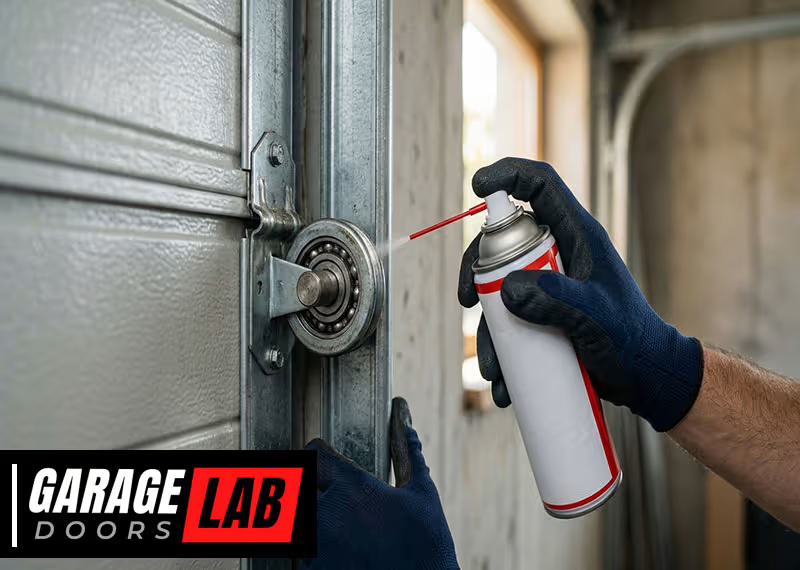
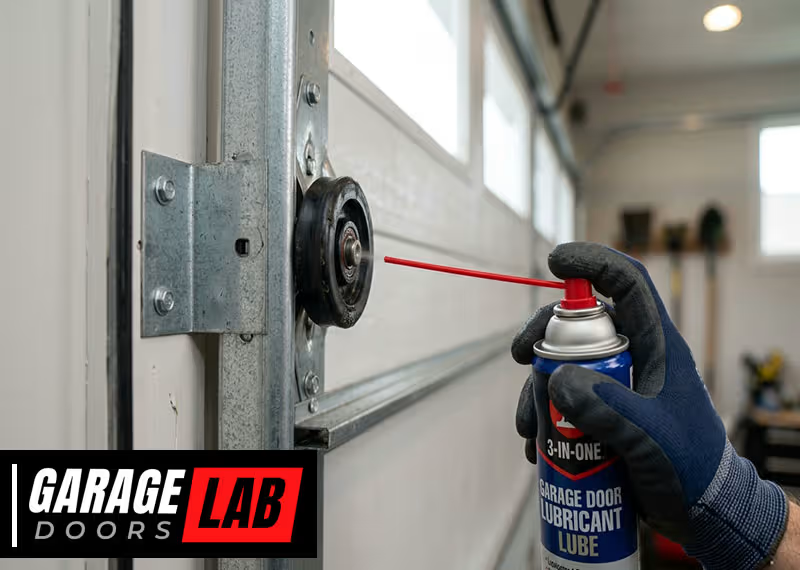
- Hinges and rollers: Lubricate to reduce friction
- Opener: Listen for strain or grinding
Lighter doors still need regular checks, but heavy doors can fail faster if ignored.
How To Choose The Right Garage Door Weight For Your Home
If you plan to buy a new garage door, consider these points:
- Climate: Insulated doors are heavier, but they save energy in hot or cold areas.
- Manual vs. Automatic: Light doors are better for manual operation. Heavy doors need strong openers.
- Aesthetics vs. Practicality: Wood looks classic but is heavy and needs care. Steel and aluminum are lighter and easier to maintain.
- Security: Heavier doors can be harder to break into, but strong steel or insulated doors offer good protection too.
Ask your installer for the exact weight, and make sure the opener and springs are rated for it.
Environmental Impact Of Garage Door Weight
Heavier doors, especially wood, require more energy and materials to make and transport. Insulated doors are heavier but help save energy in the long run. Lightweight doors (like aluminum) are easier to recycle but may not last as long.
Tip: Choose a door that fits your climate, security needs, and maintenance ability. Sometimes, a heavier door is better for comfort and energy savings.

Common Myths About Garage Door Weight
- Myth: Heavier doors are always better.
- Fact: Heavier doors can last longer, but they need more care and stronger openers.
- Myth: All steel doors weigh the same.
- Fact: Insulated, double-layer, and triple-layer steel doors can weigh twice as much as basic models.
- Myth: Garage door openers lift the whole weight.
- Fact: Springs do most of the lifting. Openers just move the door along the track.
Understanding these points helps you avoid mistakes when buying or maintaining your door.
How To Reduce The Weight Of Your Garage Door
If your door is too heavy, here are options:
- Replace with a lighter material: Switch from wood to steel or aluminum.
- Remove windows or hardware: Less glass or hardware means less weight.
- Use lighter insulation: Some foam types add less weight.
- Regular maintenance: Keep parts in good shape to avoid extra strain.
Remember, a lighter door may be easier to use but might offer less insulation or security.
What To Do If Your Garage Door Is Too Heavy
If your door feels too heavy:
- Stop using it: Do not force it open or closed.
- Check for broken springs or cables: Look for gaps, rust, or frayed wires.
- Call a professional: Do not try to adjust springs or replace heavy doors alone.
- Upgrade your opener: If the door is in good shape but the opener is too weak, install a more powerful model.
Never ignore a heavy-feeling door. It is a safety risk for you and your family.
How To Safely Add Weight (windows, Insulation, Hardware)
Want to add windows or insulation to your existing door? Here’s how to stay safe:
- Check your springs and opener rating: Find out how much extra weight they can handle.
- Add weight evenly: Put windows or hardware symmetrically to avoid imbalance.
- Consult a pro: Ask a technician to adjust springs or replace them if needed.
Never add more than 20 pounds without checking with a professional. Springs and openers are designed for specific weights.
Comparing Garage Door Weight To Everyday Objects
It’s hard to picture 200 pounds. Here are some examples:
- A single-car steel garage door weighs as much as a large refrigerator
- A double-car insulated door is about the same as a motorcycle
- Some wood doors are as heavy as a baby grand piano
This helps you understand why garage door safety is important.
When To Replace Your Garage Door Based On Weight
If your old door is getting heavier (harder to lift, opener straining), it may be absorbing moisture or the springs are worn out. Consider replacement if:
- The door is over 20 years old
- Wood panels are swollen or warped
- The opener or springs fail often
A lighter, modern door can reduce maintenance and energy costs.
How Installers Calculate The Right Spring For Garage Door Weight
Professionals use special charts and formulas to pick the right spring. They consider:
- Door weight (in pounds)
- Door height and width
- Track type (standard, high-lift, etc.)
- Number of springs
The wrong spring can be dangerous. Always let a trained technician handle spring replacement.
For more technical information, the Wikipedia page on garage doors explains more about the mechanics.
Frequently Asked Questions
How Can I Find The Weight Of My Garage Door Without A Manual?
Look for a label or sticker on the edge of your door. It may list the weight. If not, measure the width, height, and thickness, and use the material type to estimate. Manufacturer websites often have weight charts for each model.
Why Does My Garage Door Feel Heavier Than Before?
Usually, this means a spring is broken or worn out. Springs balance the door’s weight. If they fail, you are lifting the full weight by hand, which is much heavier.
Can I Add Insulation To My Garage Door Without Changing Springs?
You can add light insulation, but if you add more than 10–15 pounds, you may need to adjust or replace the springs. Always check the spring rating first.
Is A Heavier Garage Door Safer?
Not always. Heavier doors can be harder to operate and need stronger springs and openers. Proper balance and maintenance are more important for safety than just weight.
What Is The Heaviest Type Of Garage Door?
Solid wood double-car doors are usually the heaviest, sometimes over 500 pounds. Custom wood doors or those with lots of glass can weigh even more.
Garage doors are essential for safety, convenience, and home energy use. Knowing how heavy your garage door is helps you make smart decisions about maintenance, upgrades, and safety. Whether you have a lightweight aluminum door or a heavy wood classic, understanding the weight means you can keep your home running smoothly for years to come.