
Now Reading: How Many Rockets for Garage Door: The Ultimate Installation Guide
- 01
How Many Rockets for Garage Door: The Ultimate Installation Guide
How Many Rockets for Garage Door: The Ultimate Installation Guide

Many people are surprised to discover just how important the small parts of a garage door are. When your garage door stops working smoothly, it’s often not the big parts that fail but something as simple as the garage door rockets—a term some use to describe the torsion springs or spring anchors that help lift and balance the door. If you’re asking “how many rockets for garage door,” you’re not alone. Homeowners, technicians, and DIY enthusiasts all want to know how many are truly needed for safe and reliable operation.
But the answer is not as simple as giving a single number. Different garage doors need a different number of springs or rockets, depending on size, weight, and design. In this guide, you’ll learn exactly how many are needed for your door, why these components matter, and how to make the best choices for your home.
We’ll also cover safety tips, installation advice, common mistakes, and what to do if your garage door starts acting up.
Understanding Rockets: What Are They?
Before we dive into numbers, it’s important to clarify what “rockets” means in the context of garage doors. In many regions, some people use the term “rockets” to refer to garage door springs, mainly torsion springs. These are the parts that store energy and help lift the heavy door, making it possible for you or your garage door opener to raise it without much effort.
Other times, “rockets” may refer to small support brackets or spring anchors that hold the springs in place. However, in 95% of cases, when people ask “how many rockets,” they’re talking about the springs themselves.
Key takeaway: In this article, “rockets” refers to garage door springs (mainly torsion springs).
The Role Of Springs (rockets) In Garage Doors
Garage door springs do the hard work. They balance the door’s weight, making it light enough to lift by hand or with a small motor. Without the right number of springs, your garage door can become dangerous or impossible to operate.
There are two main types of springs:
- Torsion springs: These sit above the door and twist to store energy.
- Extension springs: These stretch along the sides of the door.
Most modern garage doors use torsion springs because they’re safer and last longer. The number of springs needed depends on the door’s size, weight, and design.
How Many Rockets (springs) Does Your Garage Door Need?
Standard Single Garage Door
Most single garage doors (8-9 feet wide) use:
- One torsion spring: If the door is lightweight (made of aluminum or hollow steel), often one spring is enough.
- Two torsion springs: For heavier doors (solid wood, insulated steel), two springs are usually used for better balance and safety.
Example: A basic 8’x7’ steel door weighing 90-130 lbs will generally need one torsion spring. A heavy 8’x7’ solid wood door (180 lbs or more) should have two.
Double Garage Door
Larger double garage doors (16 feet wide) almost always require:
- Two torsion springs: These doors are heavier (160-300+ lbs), so two springs are standard for smooth, safe operation.
Practical insight: Some older double doors may have only one strong spring, but this is not recommended. If one spring breaks, the door can fall or become stuck.
Heavy Or Custom Garage Doors
Special doors—like those made of solid wood, with custom insulation, or extra height—may use:
- Three or four torsion springs: These setups are rare and usually seen on commercial or oversized residential doors (18+ feet wide or 10+ feet tall).
Example: A custom wood door weighing over 400 lbs might use three springs. Some large commercial doors use up to four.
Extension Spring Systems
For doors using extension springs (older or budget models), the number is different:
- Two extension springs: One on each side of the door, regardless of single or double width.
Important: Never use just one extension spring. It’s unsafe and can make the door twist or jam.
Quick Reference Chart
Here’s a simple table to help you match your garage door type to the right number of springs (rockets):
| Garage Door Type | Door Width | Typical Weight | Springs Needed |
|---|---|---|---|
| Standard Single (Aluminum/Light Steel) | 8-9 ft | 90-130 lbs | 1 Torsion Spring |
| Single (Heavy or Insulated) | 8-9 ft | 130-200 lbs | 2 Torsion Springs |
| Double (Standard) | 16 ft | 160-300 lbs | 2 Torsion Springs |
| Custom/Oversized | 18+ ft | 300-500 lbs | 3-4 Torsion Springs |
| Extension Spring System | Any | Any | 2 Extension Springs |
Why The Right Number Of Rockets (springs) Matters
Using the right number of springs is not just about convenience—it’s about safety and door lifespan.
- Too few springs: The door is hard to lift, puts stress on the opener, and can fall suddenly if a spring breaks.
- Too many springs: This is rare but can make balancing tricky or add unnecessary cost.
Non-obvious insight: Some installers use one strong spring instead of two for cost or speed. But if that single spring breaks, the door can slam shut, risking injury or property damage. Two springs provide a backup if one fails.
How To Identify What You Have
If you’re unsure how many springs (rockets) your garage door uses, here’s how to check:
- Close the door completely.
- Look above the door (on the inside): Torsion springs are mounted on a metal shaft parallel to the top of the door.
- Count the springs: One or two long, black, coiled springs mean torsion. Two smaller springs along the sides mean extension.
Tip: If your door is very heavy or hard to lift, you might be missing a spring or using the wrong type.
Factors That Affect The Number Of Springs
Several details influence how many springs (rockets) are right for your garage door:
1. Door Size
- Wider or taller doors need more or stronger springs.
2. Door Weight
- Heavier materials (solid wood, insulated steel) require more lifting force and often two or more springs.
3. Door Usage
- If you open and close your garage many times each day, you may want two springs for better durability and balance.
4. Safety Preferences
- Two springs are safer; if one breaks, the other helps prevent sudden drops.
5. Spring Type And Quality
- High-cycle springs last longer and may allow for fewer replacements, but not necessarily fewer springs.
Upgrading Or Replacing Springs: What To Consider
If you’re planning to upgrade or replace your springs, keep these points in mind:
Matching The Right Type
- Always use the same type (torsion or extension) your door was designed for.
- Switching from extension to torsion is possible, but requires a new shaft and hardware.
Getting The Correct Strength
Springs are rated by cycle life (number of open/close cycles) and lift weight. Don’t just count the number—make sure they’re strong enough for your door.
Professional Help
Replacing springs can be dangerous. The tension is high—if a spring snaps, it can cause injury. Always consider hiring a professional unless you have experience.
Non-obvious insight: When replacing springs, always replace both if your door uses two. If one is worn out, the other is likely close to failing.
Common Mistakes With Garage Door Rockets (springs)
- Using only one spring on a double door: Unsafe and can cause early opener failure.
- Mixing old and new springs: Leads to uneven lifting and early breakage.
- Wrong spring size: Too weak or too strong can damage the opener or the door.
- DIY without the right tools: Spring replacement requires special bars and safety gear.
- Ignoring routine checks: Not inspecting springs yearly can lead to surprise failures.
Safety Tips When Dealing With Springs
- Never try to adjust or remove springs under tension without proper tools and knowledge.
- Wear safety glasses and gloves when working near springs.
- If your door slams shut or is hard to lift, stop using it and call a pro.
- Check springs yearly for rust, gaps, or weakness.
Cost Of Replacing Or Installing Rockets (springs)
The price varies based on your door and location, but here’s a rough guide:
- Single torsion spring: $80–$120 (parts only)
- Pair of torsion springs: $120–$200
- Professional installation: $150–$300 (includes labor and parts)
- High-cycle springs: Cost more but last longer
Note: Labor is the main cost if you hire a pro, but it’s worth it for safety.
Signs Your Garage Door Springs Need Attention
If you notice any of these, your springs may need repair or replacement:
- The door is suddenly heavy or hard to lift.
- You hear a loud bang (spring breaking).
- The opener struggles or fails to lift the door.
- The door closes too fast or is uneven.
- You see gaps in the spring coils.
Upgrading To High-cycle Rockets (springs)
Most standard springs are rated for 10,000 cycles (one up and down is a cycle). If you use your garage door often, high-cycle springs (20,000–50,000 cycles) are a smart investment. They cost a bit more but reduce the risk of surprise failures.
Comparing One Vs. Two Springs: Which Is Better?
Here’s a side-by-side look at the pros and cons:
| Feature | One Spring | Two Springs |
|---|---|---|
| Cost | Lower (parts) | Higher (parts and labor) |
| Safety | Low (no backup if it breaks) | High (one spring can hold if other fails) |
| Durability | Shorter | Longer (load is shared) |
| Balance | Can be uneven | Smoother, more reliable |
| Recommended for | Light single doors | All double doors and heavy singles |
Expert advice: Even if your single garage door came with one spring, consider upgrading to two for safety and longer life.
When Do You Need More Than Two Rockets (springs)?
While two springs are standard for most double or heavy doors, some situations call for three or four:
- Oversized residential doors: 18+ feet wide or over 10 feet tall
- Very heavy custom doors: Thick wood, extra insulation, or storm-proof designs
- Commercial/industrial doors: Larger and used more often
In these cases, multiple springs spread the load and increase safety.
The Role Of Rockets (spring Anchors And Brackets)
A few people use “rockets” to mean not the springs but the spring anchors or support brackets that hold the springs in place. Here’s what you need to know:
- Each torsion spring needs one center anchor bracket.
- End bearing plates support the shaft at each end.
- The number of these parts matches the number and style of springs.
Note: If you’re replacing hardware, always use parts rated for your door’s weight and spring strength.
How To Choose The Right Rockets (springs) For Your Garage Door
- Measure your door: Width, height, and thickness.
- Weigh your door: If possible, disconnect the opener and lift the door manually. Use a bathroom scale at the bottom center when the door is halfway up.
- Check old springs: Look for color codes or part numbers.
- Consult the manufacturer’s chart: Each spring model is made for a certain weight and size.
Pro tip: If in doubt, ask a technician or use a spring calculator online.
Real-life Example: Choosing Springs For A Standard Door
Let’s say you have a 16’x7’ steel double garage door. It weighs about 220 lbs.
- Recommended: Two torsion springs, each rated for 110 lbs.
- If you use high-cycle springs (rated 20,000+ cycles), you’ll pay a bit more but get double the life.
- Never use one big spring for this door—it’s a safety risk.
How The Garage Door Opener Works With Rockets (springs)
Your garage door opener is not designed to lift all the weight. It’s meant to move a balanced door. If your springs are broken or wrong, the opener will struggle and may fail.
Surprising fact: Most openers can only lift 15–20 lbs of unbalanced weight. The springs do the rest.
How To Tell If Your Rockets (springs) Are Balanced
A well-balanced door will:
- Stay at any position when you lift it halfway
- Not slam down or shoot up
- Be easy to lift with one hand
If your door fails these tests, the springs may be wrong or worn out.
Spring Maintenance: Keeping Your Rockets In Top Shape
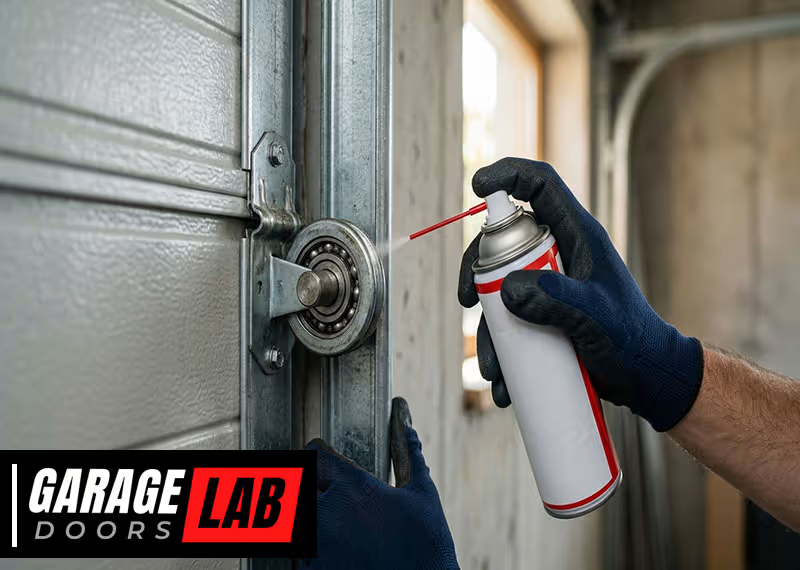
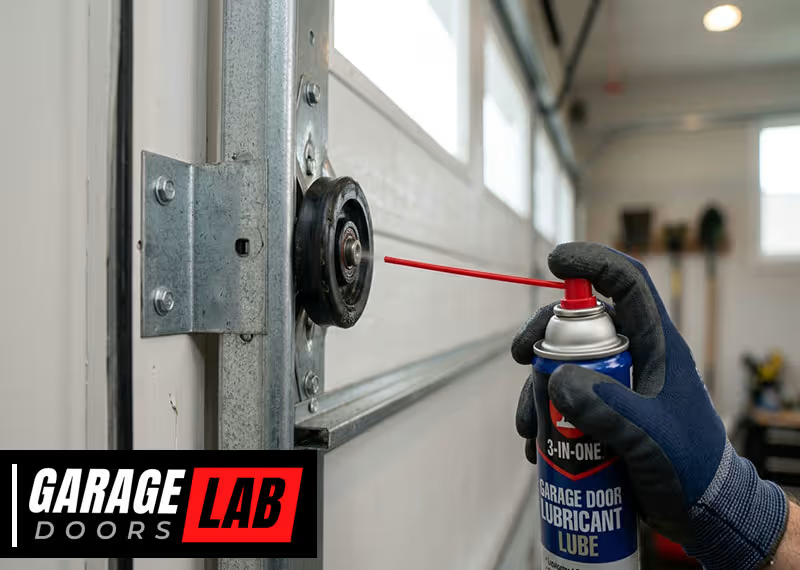
- Lubricate springs twice a year with garage door lubricant.
- Check for rust or gaps in the coils.
- Listen for noise: Creaking or squeaking can signal wear.
- Test balance: Unhook the opener and lift the door. It should stay in place.
Warning: Never attempt to adjust torsion springs yourself. The stored energy can cause serious injury.
Garage Door Rockets And Home Insurance
Some home insurance policies may require your garage door to be in good working order. Using the wrong number or type of springs can void coverage if damage or injury occurs.
Environmental Factors And Garage Door Springs
- Cold weather: Springs are more likely to break in winter due to metal contraction.
- Humidity: Causes rust. Lubricate and check springs more often if you live in a damp area.
Upgrading For Modern Safety Standards
If your garage door is over 20 years old, it may have outdated spring systems. Modern torsion springs are safer and more reliable.
- Upgrade to two springs if you have an older single-spring setup.
- Add safety cables if you use extension springs to prevent injury if they snap.
Summary: The Right Number Of Rockets For Your Garage Door
- Single, light doors: Usually one torsion spring, but two is safer.
- Heavy or double doors: Two torsion springs.
- Oversized doors: Three or four springs.
- Extension spring systems: Two springs, always.
If you’re ever unsure, it’s better to have two springs for backup and safety. The right setup means easier operation, longer opener life, and less risk of injury.
If you need more technical details or want to see diagrams, check resources like the Wikipedia page on garage door openers.
Frequently Asked Questions
How Do I Know If My Garage Door Needs One Or Two Springs?
Check your door’s weight and size. Most single, lightweight doors can use one spring, but two is safer. Double doors or heavy materials always need two. If in doubt, ask a garage door technician.
Can I Replace Garage Door Springs Myself?
It’s possible but dangerous. Springs are under high tension and can cause injury. If you’re not experienced, hire a professional. Safety is more important than saving money.
What Happens If I Use The Wrong Number Of Springs?
Using too few springs makes your door heavy and unsafe. Too many is rare but can cause balancing problems. Always match the number and strength to your door’s weight and size.
How Long Do Garage Door Springs (rockets) Last?
Standard springs last about 10,000 cycles (open/close). High-cycle springs last 20,000–50,000 cycles. With normal use, expect 7–12 years, but check them yearly for wear.
Are Torsion Springs Better Than Extension Springs?
Yes. Torsion springs are safer, last longer, and balance the door better. Extension springs are cheaper but can be dangerous if they break. Modern doors use torsion springs for a reason.
A properly balanced garage door isn’t just about convenience—it’s about safety and protecting your investment. Make sure your door has the right number of rockets (springs), and you’ll enjoy years of smooth, reliable use.