
When you start planning a new garage or want to upgrade your current one, you quickly realize that garage door width is a key detail. It’s not only about looks—choosing the right size affects daily convenience, the value of your home, and even safety. Many homeowners are surprised by how many options exist and how much measuring matters. Selecting the right width ensures your car fits comfortably, storage is accessible, and you avoid costly mistakes.
Let’s dive into everything you need to know about how wide garage doors are, what impacts their size, and how to make the best choice for your needs.
Standard Garage Door Widths
Most garages use what the industry calls “standard” widths. These sizes are common for a reason: they fit most vehicles and layouts. Still, “standard” can vary depending on where you live and the age of your home.
The most typical garage door widths are:
- Single-car garage doors: 8 feet, 9 feet, or 10 feet wide
- Double-car garage doors: 12 feet, 14 feet, 16 feet, or 18 feet wide
- RV/oversized garage doors: 10 feet, 12 feet, or even wider
The most popular size for a single car is 9 feet wide. For double garages, 16 feet wide is the usual choice. But why are these the most common? They strike a balance between cost, function, and the size of most cars.
Standard Garage Door Width Table
Here’s a quick look at typical widths for different garage types.
| Garage Type | Common Widths (feet) | Typical Height (feet) |
|---|---|---|
| Single-car | 8, 9, 10 | 7, 8 |
| Double-car | 12, 14, 16, 18 | 7, 8 |
| RV/oversized | 10, 12+ | 10, 12, more |
It’s important to remember that these are just the most common sizes—many homes have different needs.
Single-car Vs Double-car Garage Doors
Choosing between single-car and double-car garage doors is one of the first decisions for any homeowner. Each style has its own benefits and challenges.
Single-car Garage Doors
A single-car garage door usually measures 8 to 10 feet wide. It’s designed for one vehicle, but can also be useful for bikes, lawnmowers, or as a small workshop.
Advantages:
- Less expensive to install and maintain
- Easier to operate (lighter and smaller)
- Can be more energy efficient
Disadvantages:
- Limits parking to one car per door
- Less flexible if you want to park larger vehicles
Double-car Garage Doors
Double-car doors are usually 16 feet wide (sometimes 14 or 18 feet). They’re made for two cars side by side.
Advantages:
- More flexible for parking (you can park off-center)
- Easier for larger vehicles or multiple drivers
Disadvantages:
- More expensive (larger door, bigger opener)
- Heavier, sometimes noisier
Comparison Table: Single Vs Double Garage Doors
| Feature | Single-Car Door | Double-Car Door |
|---|---|---|
| Common Width | 8–10 ft | 16 ft |
| Typical Use | 1 vehicle | 2 vehicles |
| Cost | Lower | Higher |
| Flexibility | Limited | High |
| Maintenance | Simpler | May require more upkeep |
Why Do Garage Door Widths Vary?
You might wonder why there isn’t just one size for all garages. The answer is that garage door width depends on several factors:
- Age of Home: Older homes (built before the 1980s) often have narrower doors, sometimes only 7 or 8 feet wide.
- Region and Climate: In snowy regions, wider doors are helpful to avoid scraping cars on snowbanks.
- Local Building Codes: City rules may set minimum or maximum widths.
- Personal Needs: RVs, trucks, or hobbies may require more space.
Some people need a wider or taller door for boats, trailers, or lifted trucks. Others want a small, efficient space that matches the style of their house.
Custom And Non-standard Garage Door Widths
Standard sizes fit most situations, but sometimes you need something unique. Custom garage doors are made for unusual openings, extra-large vehicles, or architectural style.
Custom widths can be anything from 6 feet for a tiny shed, up to 20 feet or more for a large workshop or RV bay. These doors are often more expensive and need special installation.
When considering a custom door:
- Measure the opening carefully (width and height)
- Check with a professional about what is possible for your garage frame
- Consider the weight—a very wide door may need a reinforced opener
Custom doors can also solve problems with odd garage shapes or sloping driveways.
How To Measure For A Garage Door
Before you buy a new door, it’s critical to measure your opening correctly. Many people make mistakes here, leading to delays and extra costs.
Here’s a step-by-step way to measure for a new garage door:
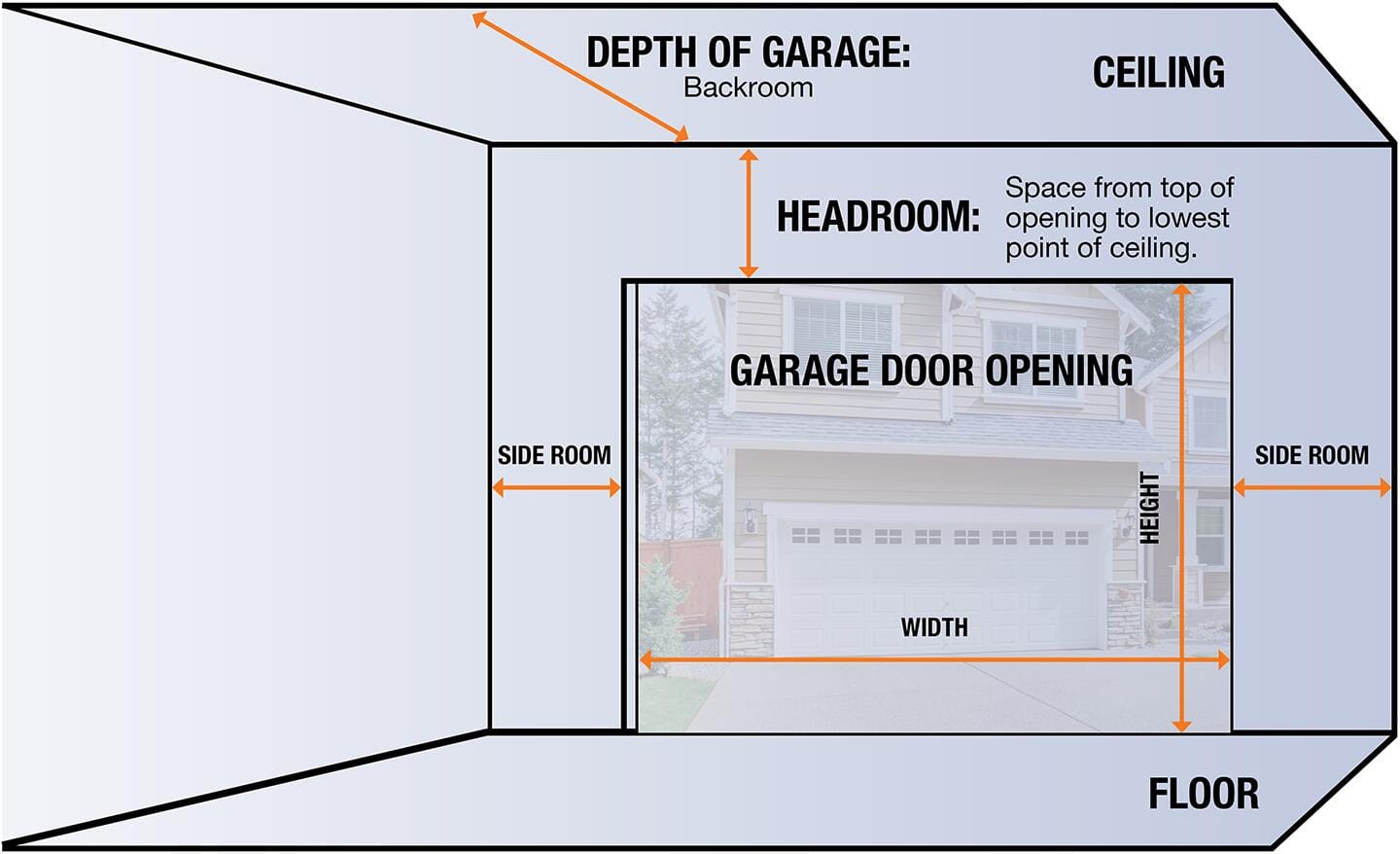
- Measure the width of the garage opening at the widest point (from left to right, brick to brick or stud to stud).
- Measure the height from the floor to the highest point of the opening.
- Check for side room (space on both sides of the opening for tracks and hardware). Most doors need at least 3.5–4 inches on each side.
- Look above the opening (headroom) for space needed by the opener and tracks—usually 10–18 inches.
- Measure the backroom (from the garage door opening to the back wall). You need enough space for the door to fully open and clear the vehicles.
If you’re not sure, it’s smart to have a professional come and confirm your measurements. Many garage door companies offer free measuring when you get a quote.
Factors That Affect The Best Garage Door Width For You
Every home and family is different. The “right” width depends on your lifestyle, plans, and even what you drive. Here are some things to think about:
Vehicle Size And Number
- Sedans and compact cars: Fit easily in 8- or 9-foot doors.
- SUVs and trucks: Often need 9- or 10-foot single doors, or a double door.
- Vans and large vehicles: Double door (16 feet) is safer, especially if multiple drivers park.
- RVs, boats, or trailers: Need oversized doors (sometimes 12 feet wide or more).
Storage And Workspace
If you store bikes, tools, or garden equipment along the sides, a wider door gives you more flexibility. You may also want extra width if you use your garage as a workshop.
Accessibility
Wider doors are easier for drivers with limited mobility or for families with young children, since there’s more room to get in and out of cars.
Aesthetics And Curb Appeal
A door that’s too small or too big can look odd. The door should match the scale of your house and driveway.
Resale Value
Homes with practical garage doors (not too narrow, not oversized) are more appealing to buyers. If you plan to sell, think about what’s standard in your area.
Common Garage Door Widths For Different Vehicles
Let’s look at how much space common vehicles need. This helps you avoid dinged doors or tough parking.
Compact Cars
Most compact cars are about 5. 5 to 6 feet wide, mirror to mirror. An 8-foot door is usually enough, but a 9-foot door gives more comfort.
Sedans And Small Suvs
These vehicles are 6 to 6. 5 feet wide. Both 8-foot and 9-foot doors work, but wider is better for less careful drivers or tight garages.
Large Suvs, Pickup Trucks, And Vans
Many trucks and large SUVs are up to 7 feet wide. A 10-foot single door or a 16-foot double door prevents scratches.
Multiple Vehicles
If you park two vehicles, a double door (16 feet wide) is almost always needed unless you have two single doors side by side.
Rvs And Boats
RVs can be 8 to 9 feet wide. For these, a special garage with at least a 10-foot door is needed—often more for easy parking and mirrors.
How Height Relates To Garage Door Width
While this article focuses on width, the height of the door is also important. Standard garage doors are usually 7 or 8 feet tall. Oversized vehicles or storage needs may require a 9-foot, 10-foot, or even 12-foot tall door.
Wider doors often need to be taller, especially for RVs or commercial vehicles. If you make the door much wider, check that your opener and tracks can handle the weight and size.
Single Vs. Double Door Garages: Layout And Usability
Some garages have two single doors instead of one double. Each style has unique benefits.
Two Single Doors
- Less heat/cold loss when one door is opened
- If one opener fails, the other still works
- Symmetrical look for certain home designs
One Double Door
- Easier to park large vehicles or back in trailers
- No center pillar, more open space
- Less complicated wiring and maintenance
The choice depends on your preference, climate, and budget. Two single doors usually cost more because you need two openers and tracks.
Upgrading To A Wider Garage Door
Many people with older homes want to replace narrow doors with wider ones. This upgrade can be complex:
- It may require widening the opening, which means changing structural parts of your garage.
- You might need a building permit for major changes.
- The cost is higher than just swapping doors, but it can increase home value and make daily life easier.
If you want a wider door, talk to a qualified contractor to check if your garage can handle it safely.
Insulation And Frame Considerations
A wider door means a larger opening. Insulation and proper framing become even more important. Wide doors can let in more cold, heat, or noise if not sealed well.
Tips:
- Choose a door with high R-value insulation for energy savings.
- Make sure the frame is strong enough to support the wider, heavier door.
- Weatherstripping should be checked and replaced as needed.
Common Mistakes When Choosing Garage Door Width
Avoiding these errors will save you time and money:
- Guessing the size without measuring—always use a tape measure.
- Not considering future needs—buying a door too small for a future vehicle or storage.
- Ignoring opener limits—not all openers can handle very wide or heavy doors.
- Forgetting about side room for tracks and hardware.
- Overlooking local codes—some towns have rules for garage door size.
A non-obvious tip: Check the slope of your driveway. If it’s steep, a standard door might “scrape” or look crooked. In these cases, a custom fit or sloped bottom panel may be needed.
Maintenance And Safety For Wide Garage Doors
A wider door is heavier and puts more stress on springs, openers, and tracks. This means:
- Springs should be checked and replaced more often.
- Tracks and rollers need to be kept clean and lubricated.
- The automatic opener should be rated for the door’s weight.
Safety sensors are required by law in most places. For extra-wide doors, install sensors at both ends and test them regularly.
Cost Comparison: Does Size Change Price?
Wider garage doors usually cost more for several reasons:
- More materials are needed (steel, wood, glass)
- Heavier doors need stronger hardware and openers
- Installation is more complex
For example, a basic 8-foot steel door might cost $700–$1,000 installed. A 16-foot double door could be $1,200–$2,500 or more, depending on features.
Custom or specialty doors (oversized, insulated, or with windows) can be much more expensive—sometimes $5,000 or higher.
When budgeting, include:
- Door price
- Opener price (if needed)
- Installation
- Possible framing changes
Regional And International Differences In Garage Door Widths
Not all countries use the same “standard” sizes. In the U. S. , 8-foot and 16-foot widths are common. In Canada, Australia, and parts of Europe, metric sizes or slightly different widths are popular.
If you’re buying a door from outside your region, double-check measurements. Always use the same unit (feet or meters) throughout your planning.
Trends In Modern Garage Door Sizes
Modern homes often feature larger garages and wider doors. This matches the trend of larger vehicles and multi-use garage spaces.
- New homes often have 9- or 10-foot single doors and 18-foot double doors.
- Luxury homes may offer three or four bays, some with custom doors for RVs or boats.
- Smart openers and insulated doors are becoming standard for wider doors.
If you’re building a new home, consider future trends so your garage doesn’t feel outdated in 10 years.
How To Choose The Right Garage Door Width
Making the right choice means balancing your current needs, future plans, and budget. Here’s a checklist for smart decision-making:
- Measure your garage opening carefully (width, height, side room, headroom).
- Consider your vehicles—their size, how many, and if you may upgrade soon.
- Think about storage and workspace needs.
- Check local building codes for any restrictions.
- Set your budget and compare options for size, style, and material.
- Get professional advice if you’re not sure—many suppliers offer free consultations.
Real-life Examples
- Family with two sedans: A 16-foot double door gives both drivers space and flexibility.
- Homeowner with a pickup truck: A 10-foot single door or a double door prevents damage.
- RV enthusiast: Needs a 12-foot wide by 12-foot tall custom door.
- Older home owner: Upgrades from a 7-foot to a 9-foot door for better access.
Each situation is unique, but the right width makes life easier every day.

Advanced Tips: What Most People Don’t Realize
Many people focus only on the opening size, but two extra details can make a big difference:
- Garage door “clearance” is not just the width of the opening. Make sure you have enough room for mirrors, door handles, and any future accessories (like bike racks).
- Track and opener placement: Very wide doors sometimes need special tracks or “jackshaft” openers mounted on the wall, not the ceiling. This is important if you have low headroom or want to use the ceiling for storage.
When To Go Custom
If your garage is non-standard, a custom-sized door is sometimes the only option. Reasons to go custom include:
- Oddly shaped garage openings (arched, sloped, or very wide)
- Homeowners with classic cars, boats, or unique vehicles
- Matching the look of a historic or architect-designed home
Work with a reputable manufacturer, and ask for references before ordering a custom door.
How Garage Door Widths Affect Home Value
A garage that’s too small or awkward makes a home less appealing. On the other hand, a well-sized door adds value and makes the property more marketable.
- Real estate agents often recommend at least a 9-foot wide single door or a 16-foot wide double door for resale.
- Homes with oversized garages (RV or boat storage) can attract a premium in some areas.
Wider doors also suggest a newer, more updated home—something buyers notice.
Garage Door Widths And Energy Efficiency
Don’t forget that a wider door means more space for heat or cold to enter. Choose a door with good insulation, especially if you live in a place with extreme temperatures or use the garage as living space.
- Look for doors with a high R-value (insulation rating).
- Add weatherstripping and seals around the edges.
- Consider insulated glass panels if you want windows.
Energy savings can pay for the higher cost of a well-insulated, wider door over time.
Where To Find More Information
For further details, you can check the Wikipedia page on Garage Doors, which covers types, sizes, and history in more depth.
Frequently Asked Questions
How Wide Is A Standard Single Garage Door?
A standard single garage door is usually 8 or 9 feet wide. This fits most cars, but if you drive a large SUV or truck, a 10-foot wide door may be better.
How Wide Is A Typical Double Garage Door?
Most double garage doors are 16 feet wide. This allows two average vehicles to park side by side and open their doors comfortably.
Can I Make My Garage Door Wider?
Yes, you can often widen a garage door, but it may involve structural changes to your garage. This could mean moving or reinforcing the walls. Always check with a professional and get the right permits.
Are Wider Garage Doors More Expensive?
Yes, wider doors cost more. The price increases because of extra materials, heavier springs, and sometimes special openers. Custom or oversized doors are the most expensive.
What Is The Widest Garage Door Available?
Custom garage doors can be made over 20 feet wide for special uses like RVs or commercial garages. However, most homes use doors up to 18 feet wide for double garages.
Choosing the right garage door width is about more than just numbers. It’s about comfort, safety, and making your daily routine smoother. Take your time to measure, consider your needs, and plan for the future. The right decision now will save you money and hassle later—and make every trip in and out of the garage a little easier.