Now Reading: How Wide is a Standard Garage Door? Essential Measurements Explained
- 01
How Wide is a Standard Garage Door? Essential Measurements Explained
How Wide is a Standard Garage Door? Essential Measurements Explained

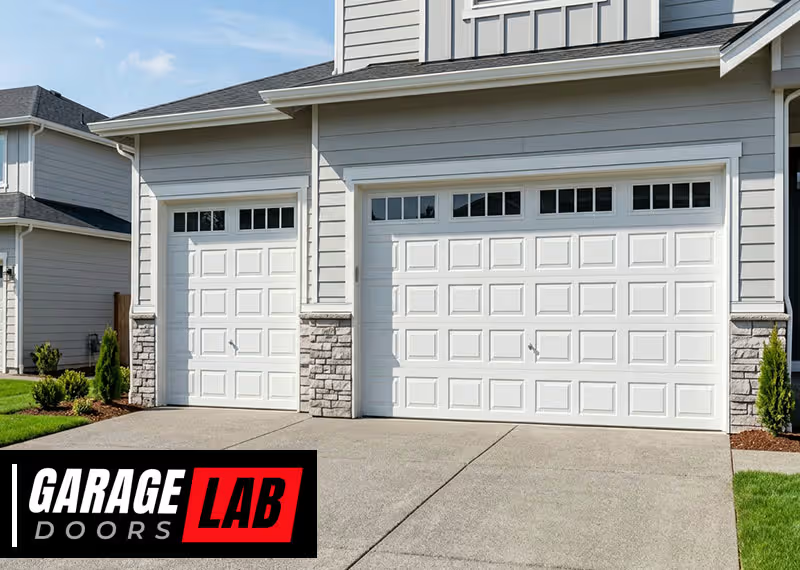
When you plan to build or update a garage, one question often comes up: How wide is a standard garage door? The width of your garage door affects everything from the type of vehicles you can park, to storage, safety, and even your home’s curb appeal. While it might sound simple, garage door sizing has many details, options, and sometimes confusing industry standards. If you’re a homeowner, contractor, or just curious, understanding these dimensions is key to making the right choices.
In this article, you’ll find a clear, complete guide to standard garage door widths. We’ll break down the different sizes for single and double doors, explore how door height fits in, and look at special cases like RV or commercial doors.
You’ll also learn about custom sizing, common mistakes, and how to measure for a new door. If you want a garage door that fits your needs and your home, keep reading.
What Does “standard” Garage Door Width Mean?
People often hear the word standard and think every garage door is the same size. In reality, “standard” means the most common widths used by builders and manufacturers. Over the years, the garage door industry has developed a few popular sizes that fit most needs. These sizes are not laws, but they do make buying, replacing, or upgrading much simpler.
Standard sizes are widely available at hardware stores and from installation companies. They offer good value, easier installation, and fast delivery. If you choose a size outside these standards, you may pay more and wait longer for custom manufacturing.
The Most Common Garage Door Widths
Let’s look at the actual numbers. In the US, single car garage doors and double car garage doors have their own sets of common widths.
Single Car Garage Door Widths
A single garage door is for one vehicle. These are the most popular sizes:
- 8 feet wide (96 inches): This is the classic single car door size. It fits most cars and smaller SUVs. It’s often found in older homes or detached garages.
- 9 feet wide (108 inches): This width is now the most popular for new homes. It provides more clearance for modern vehicles, which are often wider than cars built 30 years ago.
- 10 feet wide (120 inches): Some builders and homeowners go for a 10-foot door for extra comfort. This is helpful if you drive a large SUV, pickup, or want more room to walk beside your car.
Why Do These Sizes Matter?
A narrow door, like 8 feet, may feel tight with a bigger car or if you want to open your doors wide. A 9- or 10-foot door gives more flexibility, especially as vehicles get larger. If your garage is also a workshop or storage area, that extra foot can make a difference.
Double Car Garage Door Widths
A double garage door fits two vehicles side by side. Here are the most common sizes:
- 12 feet wide (144 inches): This is the minimum for two small cars. However, it’s less common today because it’s a tight squeeze.
- 14 feet wide (168 inches): Used in some older garages or for those with limited space.
- 16 feet wide (192 inches): This is the modern standard for double garage doors. It fits two cars, trucks, or SUVs comfortably, with room to open doors.
- 18 feet wide (216 inches): Some high-end homes or those with oversized vehicles use 18-foot doors for even more space.
Choosing Between Double And Two Singles
Some homeowners install two single doors (like two 9-foot doors) instead of one double. This can make your garage look more balanced and allows you to open one side while leaving the other closed. However, a double door is more convenient for parking and moving large items.
Common Standard Garage Door Widths Overview
Here’s a quick look at the most used widths:
| Type | Common Widths (feet) | Common Widths (inches) |
|---|---|---|
| Single Car | 8, 9, 10 | 96, 108, 120 |
| Double Car | 12, 14, 16, 18 | 144, 168, 192, 216 |
Standard Garage Door Heights
Width is only part of the story. Standard garage door height also matters, and it usually goes hand-in-hand with width.
The most common garage door heights are:
- 7 feet (84 inches): This is the classic height, found in most older and many new homes.
- 8 feet (96 inches): Provides more clearance for taller vehicles, like lifted trucks or SUVs with roof racks.
Some homes, especially those for RVs or commercial use, may have doors as tall as 10, 12, or even 14 feet. But for residential garages, 7 and 8 feet are by far the most common.
Typical Size Combinations
Most garage doors follow these pairs:
- 8′ wide x 7′ high
- 9′ wide x 7′ high
- 16′ wide x 7′ high
- 8′ wide x 8′ high (for taller vehicles)
- 16′ wide x 8′ high
Builders and manufacturers design garages to these standards, making replacement and repairs easier.
Special Garage Door Sizes
Not every garage fits the “standard” mold. Some homes, businesses, or hobbyists need unique sizes.
Rv Garage Doors
Recreational vehicles (RVs) and large trailers require extra-tall and often wider doors. Typical RV door sizes include:
- 10 to 12 feet wide
- 12 to 14 feet high
These doors let you drive in tall motorhomes or trailers without scraping the roof. Even if your vehicle fits, always check for extra roof accessories—air conditioners or antennas can add to the required height.
Commercial Garage Doors
Shops, warehouses, and fire stations use doors much larger than home garages. Common commercial sizes are:
- 12 to 24 feet wide
- 12 to 16 feet high
These accommodate delivery trucks, vans, or special equipment. If you need commercial doors, your installer will measure for your exact use.
Custom Garage Doors
Some garages, especially in older homes or unique architectural designs, don’t fit any standard size. In these cases, manufacturers can build a custom garage door to fit your opening. Custom widths can be anything from 7 feet to more than 20 feet.
Custom doors cost more and may take longer to build and deliver. But if you have an unusual garage, it’s sometimes the only choice.
How To Measure For A New Garage Door
Getting the right size starts with accurate measurements. Here’s how to do it:
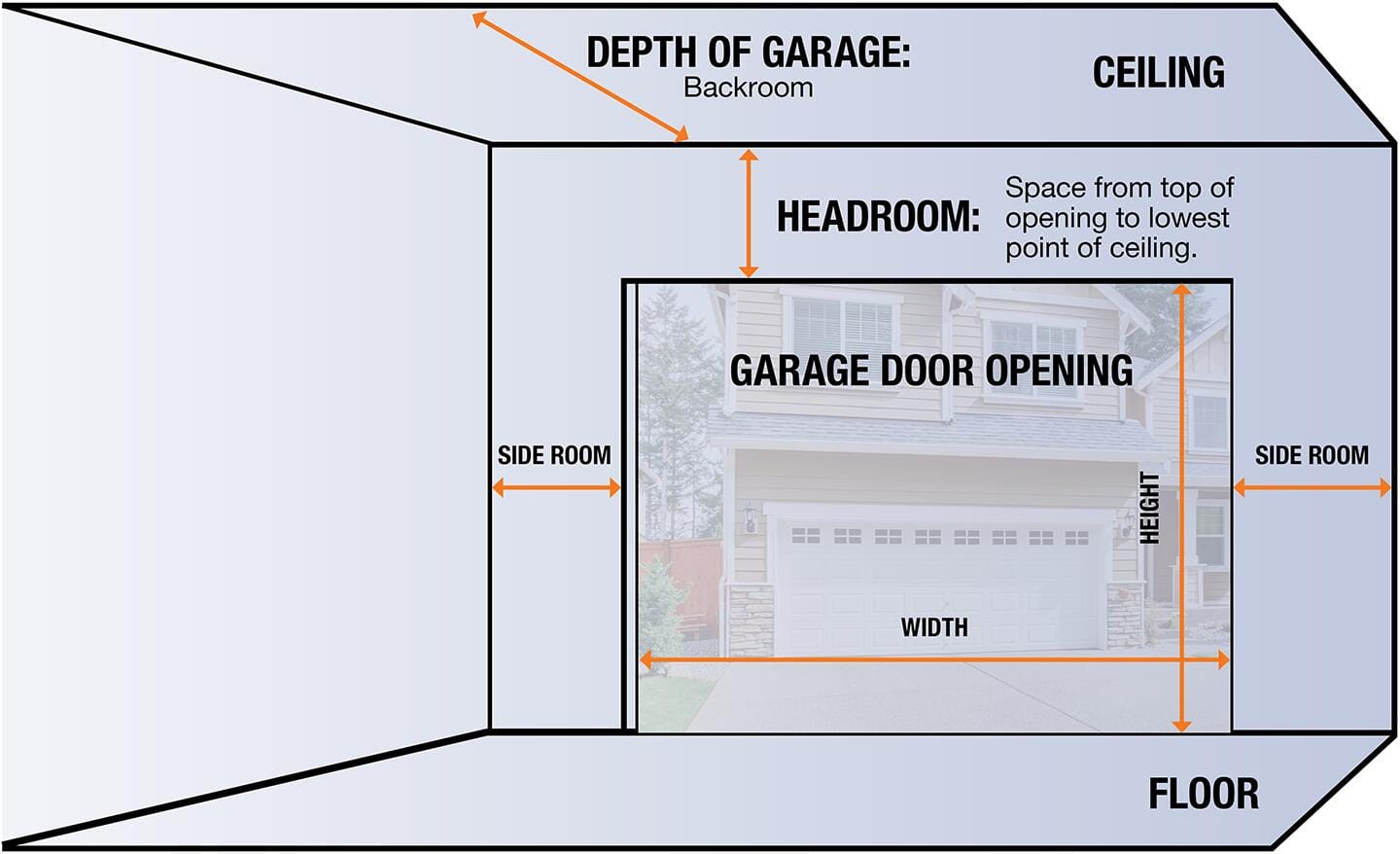
- Measure the width: Use a tape measure to find the distance from one side of the finished opening to the other, at the widest point.
- Measure the height: Go from the floor to the lowest point at the top of the opening.
- Measure the headroom: This is the space from the top of the opening to the ceiling. Most doors need at least 12-18 inches for the door tracks and opener.
- Measure the sideroom: Check the distance from each side of the opening to the nearest wall or obstruction. You’ll need 3-5 inches for the tracks and hardware.
Always measure in feet and inches, and double-check each number. If you’re replacing an old door, don’t just use its size—measure the actual opening. Old doors can sag, and frames may settle over time.
| Measurement | What to Measure | Minimum Needed |
|---|---|---|
| Width | Side to side of finished opening | As needed for door |
| Height | Floor to top of opening | As needed for door |
| Headroom | Top of opening to ceiling | 12-18 inches |
| Sideroom | Side of opening to nearest wall | 3-5 inches |
Pro Tips For Measuring
- Always measure at three spots (left, center, right) and use the smallest number.
- Take photos and write down your numbers.
- If your measurements are not even feet (for example, 8’3”), you’ll likely need a custom door.
- If in doubt, have a professional installer double-check.
Factors That Affect Garage Door Width Choice
You may wonder: “Should I just pick the widest door possible?” Not always. Here are key factors to consider:
Vehicle Size
Measure your vehicles, including mirrors and doors. Modern SUVs, trucks, and minivans are often wider than sedans from the 1980s or 1990s. A garage door that feels roomy for a compact car may be tight for a new pickup.
Tip: Leave at least 12 inches on each side of your car for easy entry and exit.
Storage And Workspace
If you store bikes, lawn equipment, or have shelves along the walls, a wider door helps. It’s much easier to move things in and out if you have extra space.
Home Design
Some homes have narrow lots or unique designs. The garage opening may be limited by house structure, property lines, or landscaping.
Budget
Wider doors cost more. If you’re on a tight budget, an 8- or 9-foot single door is more affordable than a 16-foot double. However, consider your long-term needs.
Local Building Codes
Some cities or homeowner associations (HOAs) have rules for garage size, shape, or style. Always check before buying a door.

How Door Material Affects Size Options
Garage doors come in many materials: steel, wood, aluminum, fiberglass, and even glass. Some materials are easier to make in custom sizes. For example:
- Steel doors: Most flexible, easy to order in many widths.
- Wood doors: Heavier, may have size limits due to weight.
- Aluminum or glass: Common for modern or “full view” doors, often custom-made.
If you want a very wide door, steel is usually the best choice for strength and durability.
Non-obvious Insights About Garage Door Sizing
When planning a garage door, there are a few things that catch many people by surprise:
- Older homes may have “odd” sizes. Homes built before the 1970s sometimes have door openings that are 7 feet, 8 feet 6 inches, or other non-standard widths. This can make replacement tricky or more expensive.
- Insulation adds thickness, not width. If you upgrade to an insulated door, it won’t affect the opening width—but it will make the door heavier. Make sure your opener is rated for the new weight.
- Decorative hardware can reduce clearance. Handles, hinges, and windows may stick out, especially on carriage-style doors. This may reduce actual opening width by a small amount.
- The finished opening is not always the same as the door size. The “rough opening” (framing) is often wider than the “finished opening” (trimmed). Garage doors are sized to fit the finished opening, so always measure after trim is installed.
Garage Door Size And Home Value
A well-sized garage door can add value to your home. Here’s why:
- Curb appeal: A door that fits the house design and is well-proportioned makes your home look more attractive.
- Functionality: If your garage door is too narrow, it limits the types of vehicles or uses you can enjoy.
- Resale: Buyers with larger vehicles or hobbies often ask about garage size.
A too-narrow door, or one that looks out of place, can actually hurt your home’s value.
Custom Vs Standard Garage Doors: Which Should You Choose?
Most homeowners are happy with a standard size. Here’s why:
- Faster installation: Standard doors are often in stock.
- Lower price: Manufacturers produce them in bulk, saving money.
- Easy replacement: If something goes wrong, parts are widely available.
However, custom doors are sometimes necessary for:
- Unusual garage openings.
- Special architectural styles.
- Needing extra-wide or extra-tall doors for RVs, boats, or commercial use.
If you’re unsure, talk to a garage door specialist. They can show you both options and help you weigh the costs.
Garage Door Size And Opener Compatibility
Not all garage door openers work with every door size. Here’s what to check:
- Wider or heavier doors need stronger openers: A standard 1/2 horsepower opener works for most single or light double doors. For 16- or 18-foot wide, or insulated wood doors, a 3/4 horsepower or higher opener is better.
- Track and spring systems: Wide doors use special tracks and torsion springs. Make sure your installer includes the right hardware.
- Safety features: Wider doors must have sensors and auto-reverse systems for safety.
If you replace your door with a wider or heavier one, check if your opener can handle it.
Common Mistakes When Choosing Garage Door Width
Many people make the same errors when picking a garage door size. Here’s how to avoid them:
- Measuring only the old door, not the opening. Always measure the finished opening, not just the old door’s panel.
- Forgetting about vehicle accessories. Roof racks, mirrors, or bike racks can add width or height.
- Not planning for future needs. Kids grow up, families buy bigger cars, or you might want a workshop. Plan for extra space if possible.
- Ignoring local codes or HOA rules. Some areas limit garage door size or style.
- Choosing a door too wide for the garage structure. Very wide doors need strong framing and supports. Don’t exceed what your garage can handle.
How To Decide: Single Vs Double Doors
Both options have benefits and drawbacks. Here’s a quick comparison:
| Feature | Single Doors | Double Door |
|---|---|---|
| Number of Openings | Two separate | One large |
| Width (common) | 8-10 feet each | 16-18 feet |
| Energy Efficiency | Better (less heat loss) | More loss when open |
| Convenience | Can open one side | Easier for large vehicles |
| Appearance | Classic, balanced look | Modern, open look |
| Cost | Often more expensive | Usually lower for one large |
If your garage is very wide, you may even choose two double doors for four-car setups.
Standard Garage Door Widths Around The World
Most of this article uses US standards. Other countries have different “standard” sizes. For example:
- United Kingdom: Common single garage doors are about 7 feet wide (2134 mm) and 6’6” high (1981 mm).
- Australia: Single doors are often 8-9 feet (2400-2700 mm), doubles are 16 feet (4800 mm).
- Europe: Sizes vary widely, often smaller than US doors.
If you buy an imported door or hardware, always double-check the measurements.
When To Choose A Non-standard Width
Sometimes, a standard size won’t work. You may need a custom width if:
- Your garage was built before 1960.
- You have an odd-sized opening due to remodeling.
- You drive a vehicle too wide for standard doors (like a dually truck).
- You want a unique look or design.
Custom doors offer freedom, but come with higher cost and longer wait times.
Installation Tips For Wide Garage Doors
If you choose a door 16 feet or wider, follow these extra tips:
- Use reinforced tracks and hardware. Wide doors are heavy and need strong support.
- Make sure the garage floor is level. Even small slopes can cause large doors to stick or wear unevenly.
- Consider wind load. In hurricane-prone areas, you may need special bracing or impact-resistant doors.
- Ask about emergency release features. If your opener fails, you’ll want a safe manual override.

Maintenance And Durability For Wide Doors
Wider doors need a bit more care:
- Lubricate tracks and springs at least twice a year.
- Check for sagging or uneven movement.
- Inspect weatherstripping to keep out rain and dust.
A little maintenance helps your door last longer and work more safely.
Professional Advice: When To Call An Expert
While measuring and choosing a garage door may sound simple, mistakes can be costly. Call a professional installer if:
- Your opening is not a standard size.
- You have questions about structural support.
- You want to add insulation, windows, or special features.
- Your garage is attached to living space—energy efficiency and security are more important here.
A good installer will measure, recommend the right size, and handle any surprises.
Where To Find More Information
For more about garage doors, design, and installation, you can visit the Wikipedia entry on garage doors. It covers history, types, and technical standards.
Frequently Asked Questions
How Wide Is A Standard Single Garage Door?
In the US, a standard single garage door is usually 8, 9, or 10 feet wide. The most popular modern size is 9 feet wide, which fits most vehicles comfortably.
How Wide Is A Standard Double Garage Door?
A standard double garage door is typically 16 feet wide. Some homes use 14 or 18 feet, but 16 is the most common size for two cars side by side.
Can I Install A Wider Garage Door In My Existing Garage?
Maybe. It depends on the structure and available wall space. Widening the opening may require changing framing, electrical lines, or supports. Always check with a builder or garage door specialist before planning a wider door.
What If My Garage Opening Is Not A Standard Size?
If your opening is not a standard width, you can order a custom garage door. Custom doors cost more, but any reputable garage door company can help you get the right fit.
Does The Garage Door Width Affect Home Value?
Yes. A door that fits well and works for modern vehicles increases curb appeal and may raise resale value. Too-narrow or odd-sized doors can make your home less attractive to buyers.
No matter your garage’s size or style, picking the right door width is worth careful thought. A well-fitted garage door makes life easier, protects your vehicles, and adds value to your home for years to come.